CRIFS
PROJECT

7th Joint Call: CRIFS

The proposal aims to develop climate-resilient integrated farming systems (IFS) at the interface of research, education, and practice in Southeast Asia. CRIFS combines research, education, and field implementation in Switzerland, Cambodia, and Lao PDR to strengthen small-scale farms, improve resilience to climate change, and integrate new knowledge into higher education curricula.
Posted on

Background

Small-scale farms dominate Southeast Asian agriculture, providing essential contributions to food production, ecosystem health, and rural livelihoods. These farms are under increasing threat from unsustainable land use, landscape transformation, floods, droughts, and pests, all of which are amplified by climate change. Such risks endanger food systems, human and ecosystem health, infrastructure, and land value.

To counter these risks, new development pathways are required, co-designed by research, education, and practice. Integrated Farming Systems (IFS), with their systemic perspective on landscapes, offer potential solutions for climate-resilient farming. They provide opportunities to sustain livelihoods, safeguard ecosystems, and increase resilience to extreme weather events.

The project

The CRIFS project aims to:

  • Co-develop and test climate-resilient IFS with local farmers and stakeholders in Cambodia and Lao PDR.
  • Design strategies for mainstreaming and scaling up IFS beyond the farm level.
  • Develop planning tools for local-level IFS adaptation to different agro-ecological zones and climate scenarios.
  • Integrate knowledge and competences into curricula of higher education institutions and training for extension services and policymakers in Cambodia and Lao PDR.
  • Advance sustainability pathways in line with the UN 2030 Agenda.

A mixed-methods, inter- and transdisciplinary research approach will be used, including participatory workshops, scientific monitoring, and stakeholder engagement.

The science

CRIFS addresses climate change resilience and adaptation in agriculture by linking applied research, field practice, and education. It will:

  • Generate evidence on IFS performance under climate change conditions.
  • Test and evaluate resilience of farms in participatory settings.
  • Promote Education for Sustainable Development by embedding project outcomes in higher education curricula and training programs.
  • Advance sustainability science through collaboration between European and Southeast Asian partners.

The team

  • Dr. Julie Gwendolin Zaehringer (Coordinator), University of Bern, Switzerland
  • Bounthanom Bouahom, National Agriculture, Forestry and Rural Development Research Institute, Lao PDR
  • Sayvisene Boulom, National University of Laos, Lao PDR
  • Tim Sophea, Royal University of Agriculture, Cambodia


Contact:
Dr. Julie Gwendolin Zaehringer                           E-Mail: julie.zaehringer@unibe.ch 

Seafood-NP-NT
PROJECT

7th Joint Call: Seafood-NP-NT

The proposal aims to develop an innovative nanotechnology approach for shrimp (Litopenaeus vannamei and Macrobrachium rosenbergii) shelf-life extension using plant-based bioactive compounds. The project focuses on natural, sustainable alternatives to chemical additives and applies nanotechnology to enhance effectiveness and stability.
Posted on

Background

Southeast Asia is the global hub for shrimp aquaculture, particularly L. vannamei, P. monodon, and M. rosenbergii, and is the top exporter to the EU. The global shrimp market is projected to grow to 23.4 billion US-Dollar by 2026. However, shrimp are highly vulnerable to rapid postharvest quality changes such as melanosis (blackening), microbial spoilage, and chemical deterioration during storage and transport.

Currently, sodium metabisulfites are widely used to prevent quality loss, but they pose health risks, especially for individuals with asthma. Thus, safe and effective natural alternatives are urgently needed. Plant polyphenols from sources such as green tea, guava leaves, and mango leaves show antioxidant, antimicrobial, and anti-melanosis properties and can be extracted from agricultural processing waste (APW).

The project

Seafood-NP-NT aims to:

  • Extract and characterise polyphenols from APW (mango leaves, soursop leaves, bay leaves, green tea waste).
  • Select bioactive extracts with strong antioxidant and antimicrobial activities and standardise them.
  • Test their effect on melanosis inhibition and shelf-life extension of L. vannamei and M. rosenbergii during storage.
  • Evaluate dietary supplementation effects on shrimp performance and post-harvest quality.
  • Apply nanotechnology (nano-liposomes, nano-phytosomes, nanofiber sheets for intelligent packaging) to improve stability, bioavailability, and controlled release of bioactive extracts.
  • Validate the effectiveness of nanoengineered bioactives in real shrimp storage conditions.

The science

The project brings together food science, nanotechnology, aquaculture, and microbiology. Key research areas include:

  • Polyphenol extraction from waste biomass and testing of antioxidant, antimicrobial, and PPO inhibitory activities.
  • Application of nano-delivery systems (liposomes, phytosomes) to enhance the stability and efficiency of plant bioactives.
  • Development of nanofiber-based intelligent packaging to extend shrimp shelf-life.
  • Testing dietary interventions during shrimp farming to improve resistance to melanosis.

The team

  • Dr. Nilesh Nirmal (Coordinator), Mahidol University, Thailand
  • Assoc. Prof. Dr. Furkan Saricaoglu, Bursa Technical University, Turkey
  • Assoc. Prof. Dr. Nor Khaizura Mahmud Ab Rashid, Universiti Putra Malaysia, Malaysia
  • Assoc. Prof. Dr. Nurul Ulfah Karim, Universiti Malaysia Terengganu, Malaysia
  • Dr. Wonnop Visessanguan, BIOTEC, Thailand


Contact

Dr. Nilesh Nirmal                        E-Mail: nilesh.nir@mahidol.ac.th 

SuSPack
PROJECT

7th Joint Call: SuSPack

The proposal aims to develop a sustainable and smart food packaging system that not only enhances sustainability but also provides real-time monitoring and traceability of packaged food. SuSPack combines bioplastics, natural pigments, and smart sensors to reduce food waste and improve consumer safety.
Posted on

Background

Global food security is increasingly threatened by climate change, population growth, and industrialization. Preventing food waste is a crucial part of addressing this challenge, especially at the consumption stage, where misinterpretation of expiration dates often leads consumers to discard edible products. Traditional packaging does not provide real-time freshness information, leaving consumers reliant solely on expiry labels.

Eco-innovations that use waste and by-products as resources can help mitigate these problems. If packaging could reliably indicate food freshness in real time, it would reduce food waste, enhance consumer safety, and contribute to sustainability.

The project

SuSPack proposes to:

  • Use anthocyanins extracted from grape pomace to create printing inks for smart QR labels that provide both traceability and freshness monitoring.
  • Incorporate ZIF-8 into inkjet indicator inks to enhance colourimetric response and sensitivity to food spoilage.
  • Combine smart QR barcodes with a mobile app, allowing consumers to scan and monitor freshness in real time.
  • Employ bioplastics to fabricate packaging components, enhancing environmental sustainability.
  • Demonstrate a proof-of-concept system that can be scaled to industrial food packaging applications.

The science

SuSPack brings together food engineering, materials science, chemistry, and digital tools. Key research areas include:

  • Development of smart QR barcodes with colourimetric indicators for freshness detection.
  • Integration of smartphone apps with packaging for real-time monitoring.
  • Optimisation of anthocyanin-based inks and enhancement of sensitivity with nanomaterials (ZIF-8).
  • Application of bioplastics in packaging components to reduce environmental impact.
  • Exploration of novel methodologies for scalable, industry-ready smart packaging solutions.

The team

  • Assistant Prof. Leyla Kahyaoglu (Coordinator), Middle East Technical University (METU), Turkey
  • Dr. Anis Khairuddin, University of Malaya, Malaysia
  • Prof. Alberto Romero, University of Sevilla, Spain
  • Dr. Banu Sezer, NANOSENS, Turkey


Contact:

Assistant Prof. Leyla Kahyaoglu                          E-Mail: kaleyla@metu.edu.tr 

HyPERMiS
PROJECT

7th Joint Call: HyPERMiS

The proposal aims to develop a hybrid (photo)electrocatalytic device for removing micropollutants in soil-less farming. By combining photocatalysis and electrocatalysis, HyPERMiS seeks to safeguard hydroponic water recirculation systems from harmful contaminants.
Posted on

Background

Vertical and hydroponic farming reduces land use but depends on water recirculation. Over time, pesticides, endocrine disruptors, and other micropollutants accumulate in water and can enter the food chain. Existing treatment technologies are inadequate for continuous, low-energy operation.

The project

  • Develop a two-sided Janus anode combining solar-active photocatalysts and electrocatalysts.
  • Integrate hydrogen peroxide-producing cathodes for enhanced pollutant degradation.
  • Optimize flow dynamics for real-time adaptive performance under varying light.
  • Test bench-scale prototypes in Malaysia, the Netherlands, and Sweden.

The science

  • Material science for layered catalysts.
  • Electrochemical engineering for dynamic optimization.
  • Toxicity and chemical analyses to ensure food safety.

The team

  • Prof. Ir. Dr. Wey Yang Teoh (Coordinator), University of Malaya (UM), Malaysia
  • Prof. Atsushi Urakawa, Delft University of Technology, The Netherlands
  • Assoc. Prof. Leo Yeung, Örebro University, Sweden
  • Assoc. Prof. Steffen Keiter, Örebro University, Sweden


Contact

Prof. Ir. Dr. Wey Yang Teoh                     Email: wy.teoh@um.edu.my 

Okara Valorization
PROJECT

7th Joint Call: Okara Valorization

The proposal aims to develop a sustainable valorization concept for okara, the soybean residue from tofu and soymilk production. By turning waste into value-added products, Okara Valorization seeks to achieve net-zero-waste soybean processing.
Posted on

Background

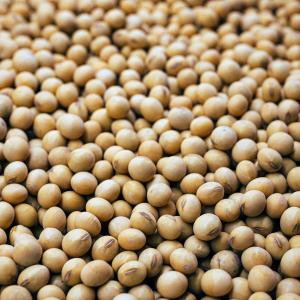
Soybean is one of the world’s most cultivated crops. Its processing generates large amounts of okara, an underutilized byproduct. Improper disposal creates waste and environmental burdens. Okara contains proteins, fibers, and bioactive compounds, making it a promising resource for food, health, and energy applications.

The project

  • Identify processing variables to improve okara quality and extraction yield.
  • Extract functional bio-based compounds and develop food prototypes.
  • Investigate anaerobic digestion for energy and fertilizer recovery.
  • Evaluate sustainability of valorization pathways.

The science

The project applies green technologies and cross-disciplinary methods:

  • Biorefinery approaches for protein, peptide, nanocellulose, and oil extraction.
  • Prototype development for food, feed, and cosmeceuticals.
  • Life cycle assessment of valorization chains.

The team

  • Dr. Aunchalee Aussanasuwannakul (Coordinator), Kasetsart University, Thailand
  • Dr. Andriati Ningrum, Universitas Gadjah Mada, Indonesia
  • Assoc. Prof. Dr. Siti Sakimin, Universiti Putra Malaysia, Malaysia
  • Professor Dr. Christoph Hugi, University of Applied Sciences and Arts Northwestern Switzerland, Switzerland


Contact

Dr. Aunchalee Aussanasuwannakul                 Email: aunchalee.a@ku.th 

Micro-GRICE
PROJECT

7th Joint Call: Micro-GRICE

The proposal aims to improve rice productivity and resilience by exploring the microbiome of rice plants and soils in Southeast Asia. By identifying beneficial microbial communities and their interactions with rice under stress conditions, Micro-GRICE seeks to develop sustainable bio-based strategies for climate-resilient rice production.
Posted on

Background

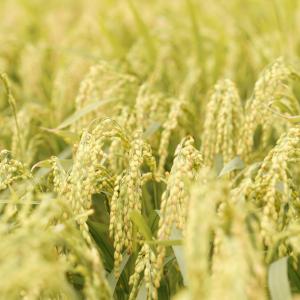
Rice is the staple food for more than half of the world’s population and particularly vital in Southeast Asia. However, climate change poses severe threats to rice yields, including drought, salinity, and flooding. Chemical fertilizers and pesticides have improved productivity but caused long-term environmental degradation and reduced soil health.

Harnessing the plant microbiome offers a promising, eco-friendly pathway to enhance nutrient uptake, improve stress tolerance, and reduce dependence on agrochemicals.

The project

Micro-GRICE pursues the following objectives:

  • Characterize rice microbiomes under normal and stress conditions in multiple Southeast Asian sites.
  • Identify beneficial microbial taxa associated with higher yields and resilience.
  • Develop microbial inoculants and formulations for rice cultivation.
  • Field test microbiome-based solutions under diverse agroecological conditions.
  • Build capacity in microbiome research across Southeast Asia through joint training and knowledge exchange.

The science

The project integrates microbiology, genomics, and agronomy:

  • High-throughput sequencing to map microbial communities in rice roots and soils.
  • Bioinformatics pipelines to identify functional microbial groups.
  • Greenhouse and field trials to validate beneficial microbes and test bioinoculants.
  • Systems approaches to link microbiome functions with rice growth, stress tolerance, and yield.

Expected outcomes include new microbiome-based technologies for rice farming, reduction in chemical input use, and improved climate resilience in rice systems.

The team

The Micro-GRICE partners are:

  • Assist. Prof. Dr. Simon Guerrero Cruz (Coordinator), Asian Institute of Technology, Thailand
  • Dr. Adrian Ho Kah Wye, Leibniz University Hannover, Germany
  • Dr. Victor J. Carrion Bravo, Leiden University, The Netherlands


Contact: 

Assist. Prof. Dr. Simon Guerrero Cruz               Email: simongc@ait.ac.th 

PULSEPRO
PROJECT

7th Joint Call: PULSEPRO

The proposal aims to tailor pulse proteins for targeted development of sustainable foods. PULSEPRO seeks to identify the physicochemical properties of legumes that control techno-functionality and link them to extraction and modification processes, enabling more sustainable plant-based food design and supporting the global protein transition.
Posted on

Background

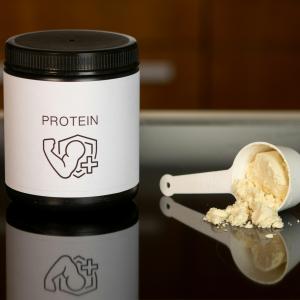
The protein transition from animal to plant-based proteins is essential for sustainable food systems. Pulses (legumes) are a key protein source, but progress is limited by insufficient knowledge of how molecular structures relate to functional properties such as gelling, emulsifying, and foaming.

Existing plant-based products often lack optimal texture, taste, or processing stability, slowing consumer acceptance. A systematic, science-based understanding of pulse protein structure–function relationships is needed to accelerate innovation.

The project

PULSEPRO will:

  • Identify generic physicochemical properties of a variety of pulses (legumes).
  • Examine how extraction and modification processes affect techno-functionality.
  • Determine optimal combinations of processing methods from a sustainability and functionality perspective.
  • Establish links between protein molecular structure and functionality using a multidisciplinary, multiscale approach.
  • Provide knowledge that accelerates targeted, efficient design of plant-based products with improved nutritional, sensory, and sustainability attributes.

The science

The project integrates food physics, chemistry, and biopolymer science. Key contributions include:

  • Advanced characterization of pulse proteins and their functional properties.
  • Linking extraction and modification processes to protein techno-functionality.
  • Development of structure–function models applicable across multiple legumes.
  • Providing a foundation for faster design of new plant-based foods adapted to consumer and sustainability needs.

The team

  • Dr. Leonard Sagis (Coordinator), Wageningen University & Research (WUR), The Netherlands
  • Dr. Chaiwut Gamonpilas, MTEC (NSTDA), Thailand
  • Prof. Dr. Stephan Drusch, TU Berlin, Germany


Contact:

Dr. Leonard Sagis                       E-Mail: leonard.sagis@wur.nl 

Agri-QDed
PROJECT

7th Joint Call: Agri-QDed

The proposal aims to develop fertilizers enhanced with quantum dots (QDs) integrated into nano-composite hydrogels for sustainable food production. This innovative approach combines biopolymers and nanomaterials to create slow-release, water-retaining fertilizers that improve crop efficiency, soil fertility, and environmental sustainability.
Posted on

Background

Global population is projected to reach 9.9 billion by 2050, placing enormous pressure on land and water resources. Current agricultural practices face rapid land degradation, water scarcity, and the need for higher efficiency.

Nanomaterials are already used in agriculture as nano-fertilizers, pesticides, and growth regulators. Their type, size, and surface properties influence plant growth. Yet, the use of quantum dots (QDs) in agriculture remains largely unexplored. QD-based fertilizers could significantly boost yields while reducing reliance on chemical pesticides and water use.

A multifunctional, low-cost, biodegradable hydrogel enriched with QDs offers both slow nutrient release and water retention, aligning nutrient supply with crop life cycles, minimizing overdosing, and lowering environmental risks.

The project

Agri-QDed will:

  • Develop biopolymer-based hydrogels entrapping nitrogen (N), phosphorus (P), potassium (K), and Si-doped carbon QDs.
  • Enhance crop growth and yield by improving soil fertility and irrigation efficiency.
  • Produce slow-release fertilizers matching crop life cycles, reducing risks of overdosing.
  • Test QD-enhanced hydrogels in both laboratory and field conditions.
  • Achieve a technology readiness level (TRL) of 4, with pathways for scaling towards market application.

The science

The project combines nanotechnology, polymer chemistry, biotechnology, and agriculture. Core scientific contributions include:

  • Synthesis of low-cost, biodegradable QD-integrated hydrogels.
  • Evaluation of nutrient release and water retention performance.
  • Plant growth and yield testing under controlled and field conditions.
  • Environmental impact analysis of QD-fertilizer application.
  • Knowledge transfer across Europe and Southeast Asia for global agricultural sustainability.

The team

  • Prof. Dr. Levent Trabzon (Coordinator), Istanbul Technical University (ITU), Turkey
  • Assoc. Prof. Siti Khodijah Chaerun, Institut Teknologi Bandung, Indonesia
  • Dr. Teo Yin Yin, University of Malaya (UM), Malaysia


Contact:

Prof. Dr. Levent Trabzon                         E-Mail: levent.trabzon@itu.edu.tr