7th Joint Call: Agri-QDed
Background
Global population is projected to reach 9.9 billion by 2050, placing enormous pressure on land and water resources. Current agricultural practices face rapid land degradation, water scarcity, and the need for higher efficiency.
Nanomaterials are already used in agriculture as nano-fertilizers, pesticides, and growth regulators. Their type, size, and surface properties influence plant growth. Yet, the use of quantum dots (QDs) in agriculture remains largely unexplored. QD-based fertilizers could significantly boost yields while reducing reliance on chemical pesticides and water use.
A multifunctional, low-cost, biodegradable hydrogel enriched with QDs offers both slow nutrient release and water retention, aligning nutrient supply with crop life cycles, minimizing overdosing, and lowering environmental risks.
The project
Agri-QDed will:
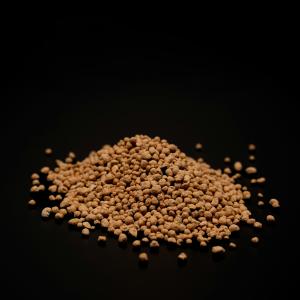
- Develop biopolymer-based hydrogels entrapping nitrogen (N), phosphorus (P), potassium (K), and Si-doped carbon QDs.
- Enhance crop growth and yield by improving soil fertility and irrigation efficiency.
- Produce slow-release fertilizers matching crop life cycles, reducing risks of overdosing.
- Test QD-enhanced hydrogels in both laboratory and field conditions.
- Achieve a technology readiness level (TRL) of 4, with pathways for scaling towards market application.
The science
The project combines nanotechnology, polymer chemistry, biotechnology, and agriculture. Core scientific contributions include:
- Synthesis of low-cost, biodegradable QD-integrated hydrogels.
- Evaluation of nutrient release and water retention performance.
- Plant growth and yield testing under controlled and field conditions.
- Environmental impact analysis of QD-fertilizer application.
- Knowledge transfer across Europe and Southeast Asia for global agricultural sustainability.
The team
- Prof. Dr. Levent Trabzon (Coordinator), Istanbul Technical University (ITU), Turkey
- Assoc. Prof. Siti Khodijah Chaerun, Institut Teknologi Bandung, Indonesia
- Dr. Teo Yin Yin, University of Malaya (UM), Malaysia
Contact:
Prof. Dr. Levent Trabzon E-Mail: levent.trabzon@itu.edu.tr