
7th Joint Call: CRIFS
Background
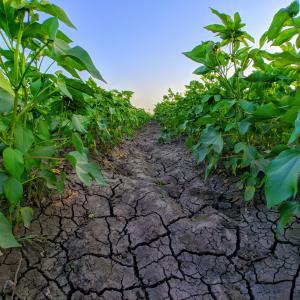
Small-scale farms dominate Southeast Asian agriculture, providing essential contributions to food production, ecosystem health, and rural livelihoods. These farms are under increasing threat from unsustainable land use, landscape transformation, floods, droughts, and pests, all of which are amplified by climate change. Such risks endanger food systems, human and ecosystem health, infrastructure, and land value.
To counter these risks, new development pathways are required, co-designed by research, education, and practice. Integrated Farming Systems (IFS), with their systemic perspective on landscapes, offer potential solutions for climate-resilient farming. They provide opportunities to sustain livelihoods, safeguard ecosystems, and increase resilience to extreme weather events.
The project
The CRIFS project aims to:
- Co-develop and test climate-resilient IFS with local farmers and stakeholders in Cambodia and Lao PDR.
- Design strategies for mainstreaming and scaling up IFS beyond the farm level.
- Develop planning tools for local-level IFS adaptation to different agro-ecological zones and climate scenarios.
- Integrate knowledge and competences into curricula of higher education institutions and training for extension services and policymakers in Cambodia and Lao PDR.
- Advance sustainability pathways in line with the UN 2030 Agenda.
A mixed-methods, inter- and transdisciplinary research approach will be used, including participatory workshops, scientific monitoring, and stakeholder engagement.
The science
CRIFS addresses climate change resilience and adaptation in agriculture by linking applied research, field practice, and education. It will:
- Generate evidence on IFS performance under climate change conditions.
- Test and evaluate resilience of farms in participatory settings.
- Promote Education for Sustainable Development by embedding project outcomes in higher education curricula and training programs.
- Advance sustainability science through collaboration between European and Southeast Asian partners.
The team
- Dr. Julie Gwendolin Zaehringer (Coordinator), University of Bern, Switzerland
- Bounthanom Bouahom, National Agriculture, Forestry and Rural Development Research Institute, Lao PDR
- Sayvisene Boulom, National University of Laos, Lao PDR
- Tim Sophea, Royal University of Agriculture, Cambodia
Contact:
Dr. Julie Gwendolin Zaehringer E-Mail: julie.zaehringer@unibe.ch