https://unsplash.com/@evanrclark
PROJECT

2nd Joint Call: SEA-dog-SEA

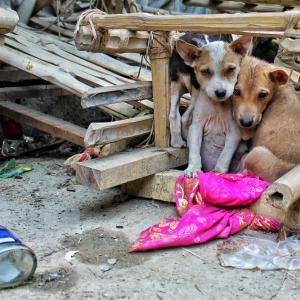
This project aims to explore the social and ecological dimensions of dog-associated zoonotic diseases in order to improve their management in rural areas of SE Asia (Socio-Ecological Approach of dog-borne diseases in SE Asia). It is funded under the 2nd Call of Southeast Asia - Europe Joint Funding Scheme for Science and Innovation.
Posted on

Background 

A large majority of human diseases is due to zoonotic pathogens, and a significant proportion of those originate from domestic animals. Dog was the first domesticated animal, with the initial centre for domestication located in Asia, and it is currently the most widespread and abundant human commensal. Dogs play an important role of reservoirs for major public health infectious threats, such as rabies. However, apart from rabies, dog-human epidemiological relationships have received relatively little attention, with disease such as cystic echinococcosis being classified as a neglected zoonotic disease. Similarly, is still unclear what roles dogs may play in Asia in the epidemiology of leptospirosis, emerging rickettsiosis or Japanese encephalitis. A key knowledge gap is the paucity of information regarding the behavioral, ecological, and socio-economic determinants of dog-human interactions in SE Asia, in order to improve the management of dog populations for veterinary and public health benefits.


The Project 

SEA-dog-SEA project will study the social and ecological dimensions of dog zoonotic diseases in rural sites selected in Indonesia (Bali), with additional sites in Cambodia and Thailand supported by complementary surveys. The field surveys will combine: i) dog ecology, population dynamics and contact network (GPS tracking, camera traps); ii) dog shared microbiome and prevalence of selected dog-borne diseases (e.g. leptospirosis, internal helminths and rickettsia); iii) perceptions and practices of local populations regarding dog keeping and management (anthropology, social-network of owners…): iv) modelling of multi-layered networks and zoonotic risks associated with dogs. The comparisons between countries will highlight the main drivers of dog-associated zoonotic risks and allow for improved management of dog populations for better prevention of spill-over risks.


The Science

The project adopts an interdisciplinary approach to analyse the linkages between dogs’ spatial behaviour and population dynamics with the socio-cultural and environmental characteristics of the study sites. The movements and distribution of selected dogs will be assessed during radio-tracking sessions using GPS collars, combined with camera-trap monitoring of marked/unmarked dog populations. A questionnaire survey (translated in Balinese/Thai/Khmer), key-informants interviews and participatory mapping will be carried out in the participating villages in order to assess local perceptions and practices regarding dog keeping and management. The screening of zoonotic pathogens in selected dogs will use standardised laboratory diagnostic techniques (rabies antibodies, leptospirosis, rickettsiosis… depending on the sites), while NGSs will be used to analyse the microbiota of sympatric free-ranging dogs based on faecal samples collected. The analysis of contact networks between dogs, and associated social networks between dog-owners, will aim at identifying key individuals/”superspreaders” and key areas/resources to target the management of spill-over risks..


The Team

The SEA-dog-SEA paartners are:

  • SEA-Dog-SEA project associates several European and SE Asian partners, most of them being members of GREASE network.
  • Coordinator: CIRAD, UMR117-ASTRE, Montpellier, France and Kasetsart University, Thailand
  • Co-Principal Investigator: One Health/EcoHealth Resource Center of the University Gadjah Mada, Yogyakarta, Indonesia
  • Co-Principal Investigator: Conservation Genetics Laboratory,Université de Liège, Liège, Belgium
  • Institutions of other associate project partners: Institut Pasteur Cambodia (Cambodia), Kasetsart University (Thailand), Udayana University, Indonesia

Contact

Michel de Garine-Wichatitsky: degarine@cirad.fr


Featured image from unsplash.com

featured image from unsplash.com
PROJECT

2nd Joint Call: MalHivPOCTs

The MalHivPOCTs project aims to develop rapid point-of-care diagnostic devices that will detect Malaria (Plasmodium genus and two species of Plamodium) and HIV drug resistance to antiretroviral using isothermal amplification methods, paper-based microfluidics and visual readout.
Posted on

Background

Malaria and human immunodeficiency virus (HIV) are two highly dangerous global infectious diseases that cause major harm especially to societies in the Southeast Asia (SEA) region. Current diagnostic technologies are cumbersome, expensive and require sophisticated equipment that can only be maintained in specialized hospitals. This means unfortunately that diagnostics are not available where and when truly needed. Specifically, current diagnostic tests for Malaria are based on microscopy, antigen/antibody detection and nucleic acid-based assays. The gold standard for the detection of mutations in HIV is Sanger sequencing. At the same time, recent advancements in biosensor and rapid-test diagnostics have demonstrated their powerful potential in addressing exactly these complex diagnostic needs in resource-limited settings. Based on our joint diverse and broad strong expertise in Malaria, HIV infectious diseases, biosensors, and nucleic-acid based systems, we propose the development of paper-based and biosensor technologies for the simultaneous detection of Malaria or HIV drug resistance, leading to a simple and low-cost, yet highly reliable and sensitive diagnostic kit.


The Project

The MalHivPOCTs project aims to develop rapid point-of-care diagnostic devices that will detect Malaria (Plasmodium genus and two species of Plamodium) and HIV drug resistance to antiretroviral using isothermal amplification methods, paper-based microfluidics and visual readout.

This project will involve parallel developments of the different components of the paper-based device from 4 partners (Germany, Indonesia, Philippines and Thailand) and hence take advantage of their respective expertise in a collaborative effort.


The Science

The MalHivPOCTs will be based on developing strategies to lyse the pathogens in the blood sample, extract DNA/RNA, amplify specific target sequences, and finally detect the product in a set of paper-based analytical devices (PADs). The device will be made from a patterned piece of chromatography paper with wax ink functioning as hydrophobic barriers and hydrophilic channel. It will integrate all sample assay steps from lysis to detection. Electrospun nanofibers will be studied to enhance DNA/RNA extraction. The recombinase polymerase amplification (RPA) is used to amplify DNA/RNA and single or simultaneous detection using colloidal gold or liposomes will result in visual detection.


The Team:

The MalHivPOCTs partners are:

  • Dr. Patsamon Rijiravanich: National Center for Genetic Engineering and Biotechnology (BIOTEC), Pathum Thani, Thailand (Project Coordinator)
  • King Mongkut’s University of Technology Thonburi (KMUTT), Bangkok, Thailand
  • Prof. Dr. dr. Fitri Engga Luki: Universitas Brawijaya (UB), Brawijaya, Indonesia
  • Angelo dela Tonga: University of the Philippines Manila, Manila (UPM), Manila, Philippines
  • Prof. Dr. Antje Bauemner: University of Regensburg (UREG), Regensburg, Germany
  • Universitas Islam Indonesia (UII), Yogyakarta, Indonesia


Contact:

Patsamon Rijiravanich: patsamon.rij@biotec.or.th 


Featured image from unsplash.com

featured image from unsplash.com
PROJECT

2nd Joint Call: Moxistrong

The overarching goal of this project is to assemble for the first time key data on the safety and efficacy and pharmacokinetics of moxidectin for the treatment of strongyloidiasis. It is funded under the 2nd Call of Southeast Asia - Europe Joint Funding Scheme for Science and Innovation.
Posted on

Background

Strongyloides stercoralis belongs to the soil-transmitted helminths and is the most neglected helminth infection among the neglected tropical diseases. It occurs almost worldwide and may result in long-lasting infections, and significant morbidity. Today, drug treatments, combined with health education programs, remain the core control strategy. The current recommended treatments are a single dose of ivermectin or multiple doses of albendazole, which has a lower efficacy compared to ivermectin. Since drug resistance is a threat it is important to develop treatment alternatives. Among new candidates in the human anthelminthic drug development pipeline, moxidectin, a macrocyclic lactone might be an excellent alternative. In an exploratory, randomized, single-blind trial to evaluate the efficacy and safety of moxidectin an excellent cure rate was observed against S. stercoralis.

The Project

The overarching goal of this project is to assemble for the first time key data on the safety and efficacy and pharmacokinetics of moxidectin for the treatment of strongyloidiasis. The project involves four highly multi-disciplinary, interlinked objectives. 1.) What is the efficacy and safety of ascending moxidectin doses (2-12 mg versus placebo) against S. stercoralis infections in adults? 2. Can dried blood spots (DBS) be used to analyse pharmacokinetic (PK) properties of moxidectin? 3. What are key PK parameters of moxidectin in patients infected with S. stercoralis? 4. What is the safety and efficacy of moxidectin against S. stercoralis compared to the drug of choice ivermectin?

The Science

Research questions are embedded in one Phase 2a and two Phase 2b clinical trials. A Phase 2a dose-finding trial will be conducted to determine the efficacy and safety of ascending single, oral doses of moxidectin versus placebo in Lao PDR in 210 adults infected with S. stercoralis. The primary outcome is to assess the efficacy of 2-12 mg moxidectin versus placebo in terms of cure rate against S. stercoralis. Secondary outcomes are the tolerability of the treatment regimens and PK properties. For this purpose venous blood will be withdrawn by cannulation from 15 adults in the Phase 2a study at 0, 2, 4, 8, 24 and 72 hours, 7 and 21 days post-treatment with moxidectin in the 8 mg study arm. From the same participants and of 15 patients in the other treatment arms DBS samples will be taken at the same time points. Once the optimal dose of moxidectin has been identified in the Phase 2a trial a Phase 2b trial will be conducted in Laos and Cambodia. This study will be a non-inferiority trial and include 245 patients treated with moxidectin, ivermectin or placebo. 35 patients will be included in the PK studies.

The Team

The Moxistrong partners are: 

Prof. Jennifer Keiser : Swiss Tropical and Public Health Institute, Switzerland

Dr. Somphou Sayasone : Lao Tropical and PublicHealth Institute, Laos PDR

Dr. Virak Khieu : National Centre for Parasitology, Entomology and Malaria Control, Cambodia


Contact: 

Jennifer Keiser: jennifer.keiser@unibas.ch 


Featured image from unsplash.com
https://unsplash.com/@luvqs
PROJECT

2nd Joint Call: PHIShINg

The project aims to develop new diagnostic tests of the Hepatitis B virus. It is funded under the 2nd Call of Southeast Asia - Europe Joint Funding Scheme for Science and Innovation.
Posted on

Background

Hepatitis B is one of the major causes of acute and chronic viral hepatitis, an infection that affects the liver. According to World Health Organization (WHO), an estimated 257 million people were living with hepatitis B virus (HBV) infection in 2015 and Hepatitis B resulted in 887 000 deaths, mostly from complications (including cirrhosis and hepatocellular carcinoma). The virus is transmitted through contact with the blood or other body fluids of an infected person. It constitutes a public health threat and is an important occupational hazard for health workers. In addition, only 9% of HBV-infected people are diagnosed always according to WHO. One reason is the limited access to affordable hepatitis tests and especially ones that can be performed by non-laboratory staff. Hence the development of diagnostic tools of infection by HBV is crucial on a public health point of view. 

The Project

The project aims to develop new diagnostic tests of Hepatitis B virus that should be inexpensive, easy to use and highly sensitive. To this end, paper-based label-free electrochemical immunosensor will be designed to integrate silver nanoparticles as redox probes for signal enhancement of the assay. Special attention will be carried out on the ease of synthesis and use.

The Science

Hepatitis B virus has a lipid envelope containing hepatitis B surface antigen (HBsAg) and this antigen is found in the blood during the incubation period and in case of acute and chronic infection. Therefore, HBsAg is considered as a major index of hepatitis B viruses (HBV) infection. Due to the highly specific binding of antigens and antibodies, immunoassays are particularly adapted to detect HBsAg. Label-free electrochemical immunosensors has attracted interest since a long time to give up the classical sandwich-type structure. Indeed this structure requires to perform several biorecognition steps to introduce a label, like in ELISA tests. On another hand, nanomaterial has also intensively been investigated for signal enhancement and improvement of the limit of detection of immunosensors due to their intrinsic advantages such as electrical properties and large surface area. Lastly, the development of microfluidic devices has been stimulated in the field of sensors with the goal to produce low-cost point-of-care diagnostics and on-site detection. Recent developments suggest that bioassays on paper-based substrates may be an interesting alternative for solid support due to the numerous advantages of paper (abundance, inexpensive, sustainable) and variety of inkjet printing techniques available for its functionalization. 

The Team

The PHIShINg partners are: 

Dr. Philippe Banet: University of Cergy Portoise (UCG) , France

Dr. Jaroon Jakmune: Chiang May University (CMU), Thailand

Dr. Akhmad Sabarudin: Brawijaya University (UB), Indonesia


Contact: 

Philippe Banet : philippe.banet@u-cergy.fr 


Featured image from unsplash.com