8th Joint Call: WPlast2H2
Background
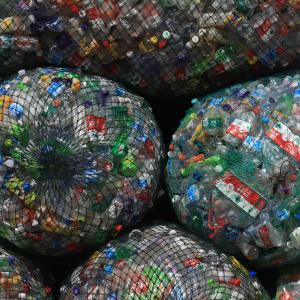
Plastic waste poses one of the most pressing environmental challenges worldwide. At the same time, the global shift to clean energy calls for efficient, affordable, and sustainable hydrogen production technologies.
Traditional catalyst systems for water splitting often rely on expensive, non-abundant materials. Transforming plastic waste (such as PET, PP, and PE) into porous carbons and metal-organic frameworks (MOFs) offers a novel route to generate cost-effective catalysts. Such waste-derived catalysts not only mitigate plastic pollution but also contribute to renewable hydrogen production, supporting circular economy principles.
The project
WPlast2H2 will:
- Establish a multidisciplinary framework linking waste management and hydrogen generation.
- Apply Multi-Criteria Decision Making (MCDM) to evaluate barriers and opportunities in regional waste upcycling.
- Convert plastic and metal wastes into high-surface-area carbon materials and photoactive MOFs.
- Optimise these materials as catalysts for water splitting under photo- and electro-catalytic conditions.
- Validate catalyst performance with natural water sources and commercial electrolyser compatibility.
- Advance development from proof-of-concept (TRL 3) toward demonstration stages (TRL 5–6).
The science
The project integrates synthetic chemistry, catalysis, waste management, and decision modelling. Key scientific goals include:
- Novel low-temperature conversion methods for plastic waste into porous carbons.
- Design of MOFs from waste plastics as organic ligand sources.
- Advanced catalyst testing for electrolysis, photocatalysis, and photoelectrocatalysis.
- Application of operando characterisation to optimise catalyst structure–function relationships.
- Linking waste valorisation to green hydrogen pathways in line with UN SDGs and national priorities.
The team
- Assist. Prof. Esmaeil Doust Khah Heragh (Coordinator), Istinye University (ISU), Turkey
- Dr. Olga Guselnikova, Centre for Electrochemical Surface Technology, Austria
- Prof. Makoto Ogawa, Vidyasirimedhi Institute of Science and Technology, Thailand
- Ján Lancok, Czech Academy of Sciences, Czech Republic
Contact
Assist. Prof. Esmaeil Doust Khah Heragh E-Mail: esmail.doustkhah@istinye.edu.tr