
5th Joint Call: NONEGON
Background
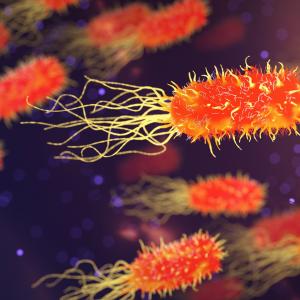
Neisseria gonorrhoeae causes gonorrhea, the second most common sexually transmitted infection worldwide, with approximately 87 million new cases annually. The pathogen is listed as a high-priority organism by the WHO due to rapidly rising antimicrobial resistance, including strains resistant to ceftriaxone and azithromycin.
The DXR enzyme, essential in the methylerythritol phosphate (MEP) pathway for isoprenoid biosynthesis, is absent in humans but critical for bacterial survival. This makes it an ideal drug target. Previous studies have shown DXR inhibitors are effective in E. coli, Y. pestis, M. tuberculosis, and apicomplexan parasites. NONEGON aims to apply this concept to N. gonorrhoeae.
The project
NONEGON pursues the following objectives:
- High-throughput screening of up to 100,000 synthetic compounds for DXR inhibition.
- Drug repurposing screen of 6,500 approved drugs to identify candidates with immediate translational potential.
- Natural product library screen including thousands of pure compounds and herbal extracts.
- Structure-based virtual screening of millions of commercially available compounds.
- Biological evaluation of promising hits for antibacterial activity, cytotoxicity, and ADME properties.
- Prioritization of repurposed drugs with DXR activity for accelerated clinical progression.
The science
The project integrates computational drug discovery, molecular biology, and antimicrobial testing:
- Fraunhofer IME (Germany): High-throughput screening and drug discovery expertise.
- Yildiz Technical University (Turkey): Structure-based drug design, molecular docking, protein purification, and enzyme kinetics.
- Mahidol University (Thailand): Infectious disease research, antibacterial testing, and translational studies.
This interdisciplinary approach maximizes the chances of identifying potent DXR inhibitors and provides a pipeline from virtual screening to in vitro validation and potential clinical candidates.
The team
The NONEGON partners are:
Dr. Björn Windshügel (Coordinator), Fraunhofer Institute for Molecular Biology and Applied Ecology (Fraunhofer IME), Germany
Prof. Dilek Balik, Yildiz Technical University (YTU), Turkey
Dr. Ratana Lawung, Mahidol University (MU), Thailand
Contact:
Dr. Björn Windshügel Email: bjoern.windshuegel@ime.fraunhofer.de