Funded Projects

CH3OH in CMR
PROJECT

7th Joint Call: CH3OH in CMR

The proposal aims to develop a catalytic membrane reactor for methanol synthesis via CO₂ hydrogenation, integrating advanced catalysts and selective zeolite membranes. This process addresses both CO₂ emission reduction and the production of valuable methanol, contributing to climate change mitigation and renewable energy development.
Posted on

Background

Methanol production from CO₂ offers dual benefits: reducing greenhouse gas emissions and producing a valuable industrial chemical. Cu–ZnO and MoP catalysts have shown high CO₂ conversion and methanol selectivity, while other metal oxides (Au, Zr, Ti, La, In, Ga, etc.) are also promising.

A major challenge lies in overcoming thermodynamic limitations: equilibrium constraints require high pressure, optimal temperature, and continuous removal of products (methanol, water). Membrane technologies, especially hydrophilic zeolites (e.g. LTA, SOD, ZSM-5), provide selective water permeation and shift the reaction equilibrium forward. The project focuses on developing defect-free zeolite membranes and catalyst–membrane integration for continuous operation.

The project

CH3OH in CMR will:

  • Develop advanced catalyst systems (MoP, Cu–ZnO–ZrO₂ doped with metals).
  • Design and fabricate NaA zeolite membranes with tailored Si/Al ratios for water selectivity and stability.
  • Integrate membranes with catalysts in a three-layer catalytic membrane reactor (catalyst, zeolite, α-Al₂O₃ support).
  • Demonstrate compatibility between CO₂ conversion rates and water permeation performance.
  • Collaborate with industrial partner PTT to apply the technology for CO₂ management in large-scale gas plants.
  • Facilitate technology transfer among research partners in Thailand, Malaysia, and Germany.

The science

The project integrates catalysis, membrane technology, chemical engineering, and materials science. Key scientific advances include:

  • Catalyst optimisation for high selectivity in CO₂ hydrogenation.
  • Design of defect-free zeolite membranes for selective water removal.
  • Integration of reaction and separation into a single catalytic membrane reactor.
  • Operando testing to optimise process conditions (pressure, temperature, selectivity).
  • Contributions to CO₂ utilisation technologies aligned with the Paris Agreement and IPCC climate goals.

This approach represents a breakthrough for green methanol production and sustainable CO₂ valorisation.

The team

The CH3OH in CMR partners are:

  • Assoc. Prof. Dr. Unalome Wetwatana Hartley (Coordinator), King Mongkut’s University of Technology North Bangkok (KMUTNB), Thailand
  • Dr. Sebastian Wohlrab, LIKAT, Germany
  • Prof. Dr. Mohamed Kheireddine Aroua, Sunway University, Malaysia
  • Nuchanart Siringuan, PTT Public Company Limited, Thailand
  • Assoc. Prof. Dr. Nur Awanis Hashim, Universiti Malaya (UM), Malaysia


Contact:

Assoc. Prof. Dr. Unalome Wetwatana Hartley              E-Mail: unalome.w.cpe@tggs-bangkok.org 
Jakarta SOS
PROJECT

7th Joint Call: Jakarta SOS

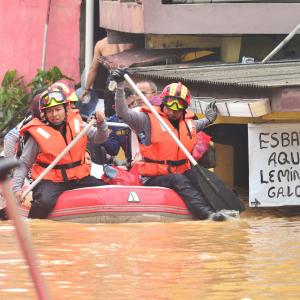
The proposal aims to develop a transdisciplinary framework to address coastal subsidence and flooding in Jakarta through socially inclusive, science-based solutions. Jakarta SOS integrates natural and social sciences with local stakeholder engagement to design mitigation and adaptation strategies for one of the world’s fastest-sinking megacities.
Posted on

Background

Jakarta faces severe land subsidence (up to 25 cm per year in some areas) driven by excessive groundwater extraction, rapid urbanization, and climate-induced sea-level rise. Combined with extreme rainfall, this threatens millions of residents with recurrent flooding, infrastructure damage, and long-term loss of habitable land.

Conventional technical measures such as sea walls have proven insufficient or socially inequitable, often displacing vulnerable communities. Sustainable solutions must integrate engineering with governance, local participation, and socio-economic resilience.

The project

Jakarta SOS pursues the following objectives:

  • Analyze hydrogeological and geotechnical dynamics of land subsidence in Jakarta.
  • Assess governance structures to identify barriers and opportunities for integrated water management.
  • Co-develop adaptation strategies with local stakeholders, focusing on equity, feasibility, and resilience.
  • Design policy recommendations combining engineering, nature-based, and social solutions.
  • Build a transferable framework applicable to other Southeast Asian delta megacities.

The science

The consortium combines hydrology, engineering, and social sciences:

  • Geoscientific analysis of groundwater depletion, soil mechanics, and coastal processes.
  • Scenario modeling of subsidence and flooding under different climate and policy conditions.
  • Participatory methods with Jakarta communities to integrate local knowledge and needs.
  • Policy and governance research to connect technical findings with actionable recommendations.

Expected outcomes include new decision-support tools, policy briefs, and stakeholder-tested adaptation pathways for Jakarta.

The team

The Jakarta SOS partners are:

  • Prof. Murat Arsel (Coordinator), Erasmus University Rotterdam, The Netherlands
  • Dr. Suraya Afiff, Universitas Indonesia, Indonesia
  • Prof. Fikret Adaman, Bogaziçi University, Turkey


Contact:

Prof. Murat Arsel            

SEA-RUFF
PROJECT

7th Joint Call: SEA-RUFF

The proposal aims to strengthen sustainable fish food systems in Indonesia and Cambodia by producing innovative, high-quality, affordable, and nutritious Ready-to-Use Fish Foods (RUFF). These will contribute to breaking the intergenerational cycle of malnutrition, improving maternal and child health, and creating export opportunities for Asian and European markets.
Posted on

Background

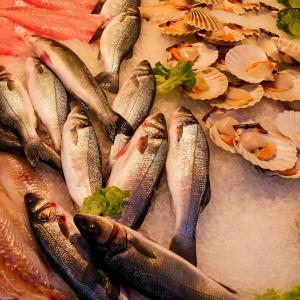
In Indonesia and Cambodia, malnutrition remains a pressing issue, especially among pregnant women, lactating mothers, and children. Stunting prevalence is a top priority for both countries. Freshwater fish is a valuable local resource but is highly perishable, leading to seasonal scarcity and post-harvest losses.

Transforming fresh fish into dried fish powder and RUFF products dramatically increases shelf life and improves organoleptic properties. This creates opportunities to supply nutritious food year-round, increase dietary diversity, and provide affordable and acceptable nutrition for vulnerable groups.

The project

SEA-RUFF pursues the following objectives:

  • Capacity building between small-scale fisheries (SSF), SMEs, and academic partners.
  • Fish processing at SME level to create high-quality fish powder.
  • Formulation and production of RUFF tailored for reproductive-age women and other groups in Cambodia and Indonesia.
  • Distribution and accessibility systems for vulnerable populations.
  • Creation of a Southeast Asian network linking academia, policymakers, and the food industry for sustainable fish food systems.

The science

The project builds on expertise from nutrition, food processing, and public health:

  • Transformation of fresh fish into nutrient-rich powders with proteins, lipids, vitamins, and minerals.
  • Development of standardized RUFF formulations meeting European requirements.
  • Evaluation of impacts on maternal and child health, including stunting prevention.
  • Behavioral change communication research to increase acceptance and sustained use.

Expected outcomes include year-round availability of nutritious fish-based foods, strengthened SME processing capacity, and scalable models for other low- and middle-income countries.

The team

The SEA-RUFF partners are:

  • Dr. Marinka van der Hoeven (Coordinator), Vrije Universiteit Amsterdam (VU Amsterdam), Netherlands
  • Damayanti Soekarjo, National Science and Technology Development Agency (NSTDA), Thailand
  • Dr. Wieringa Frank, SEAFAST-IPB, Indonesia
  • Dr. Puspo Giriwono, Institut de Recherche pour le Développement (IRD), France
  • Dr. Sokneang In, SAVICA, Cambodia
  • Lyndon Paul, Danish Care Foods Co., Ltd, Cambodia


Contact: 

Dr. Marinka van der Hoeven                  Email: m.vander.hoeven@vu.nl