9th Joint Call: APOLLO
Background
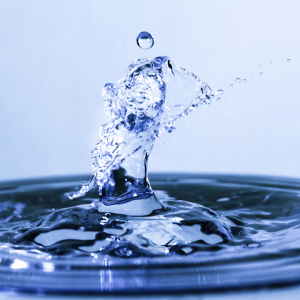
Freshwater resources face growing stress due to pollution, industrial expansion, and rising demand. Ensuring clean, safe water requires effective monitoring technologies and high‑performance pollutant‑absorption materials. At the same time, global sustainability agendas call for the valorisation of waste streams and renewable raw materials. APOLLO responds to these challenges by transforming biomass residues into valuable composite materials suitable for environmental remediation. The approach aligns with circular‑economy principles and supports “zero pollution” objectives in industrial and municipal wastewater contexts.
The project
The project focuses on three major technological components:
- Biopolymers derived from marine and terrestrial biomass using environmentally friendly extraction and modification techniques.
- Conductive polymers such as poly‑indole (PIN) and modified poly‑porphyrins, enabling enhanced electrochemical sensing.
- Structuring technologies including electrospinning, electrospraying, and micro‑droplet deposition to create 3D interfaces and coatings for improved material performance.
The science
- Production and modification of biopolymers obtained from waste biomass using sustainable chemical and biotechnological methods.
- Synthesis of conductive polymers and tuning of their electronic properties for electrochemical sensing applications.
- Fabrication of composite structures through electrospinning/electrospraying to create high‑surface‑area materials.
- Comparative analysis of torrefaction and pyrolysis products from biomass precursors to optimize carbonaceous components.
- Electrochemical characterization using cyclic voltammetry, impedance spectroscopy, and related analytical techniques.
The team
The APOLLO partners are:
Dr. Elena Tomsik (Coordinator), Institute of Macromolecular Chemistry (IMC), Czech Republic
Dr. Catalina Natalia Yilmaz, Dokuz Eylül University (DEU), Türkiye
Dr. Nona Merry Merpati Mitan, Universitas Pertamina (UPER), Indonesia
Dr. Mihai – Adrian Brebu, “Petru Poni” Institute of Macromolecular Chemistry, Romanian Academy (ICMPP), Romania
Dr. Onur Yilmaz, ACADEMICHEM (SME), Türkiye
Contact:
Dr. Elena Tomsik tomsik@imc.cas.cz