

8th Joint Call: WASTE4CHAR
Background
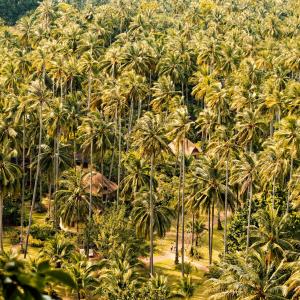
Malaysia is the world’s second-largest producer of crude palm oil, a key biofuel feedstock. However, the industry faces criticism for unsustainable practices, including deforestation, biodiversity loss, greenhouse gas emissions, and water pollution.
Palm oil residues represent a large, underused resource that could be transformed into value-added products. Soils in Malaysia are often sandy, acidic, and nutrient-poor, limiting agricultural productivity. Biochar and related products can improve soil fertility, increase crop yields, and contribute to sustainable land management.
By applying circular economy principles to palm oil residues, WASTE4CHAR addresses both environmental impacts and food security challenges.
The project
WASTE4CHAR will:
- Apply pyrolysis and HTC processes to palm oil residues with varying properties.
- Engineer biochar and carbon-rich materials for use as soil amendments and renewable energy carriers.
- Conduct greenhouse experiments to test soil fertility and crop yield impacts.
- Investigate combustion behavior and gasification potential of chars for energy applications.
- Use modelling and life cycle analysis (LCA) to evaluate environmental and economic performance.
- Develop pathways for integrating carbon materials into sustainable agricultural and energy systems.
The science
The project combines engineering, soil science, chemistry, and environmental analysis. Key scientific components include:
- Thermo-chemical conversion of organic residues to tailor structural and chemical properties of biochar.
- Greenhouse testing of biochar effects on crop yields in tropical soils.
- Analysis of chars’ combustion and gasification properties for energy production.
- LCA-based evaluation of sustainability and climate benefits.
- Cross-disciplinary collaboration to link waste valorisation with circular agriculture and renewable energy.
The team
- Dr. Beatrice Kulli Honauer (Coordinator), Zurich University of Applied Sciences, Switzerland
- Dr. Gozde Duman Tac, Ege University, Turkey
- Prof. Dr. Nik Nazri Nik Ghazali, Universiti Malaya, Malaysia
- Dr. Chau Huyen Dang, Leibniz Institute for Agricultural Engineering and Bioeconomy, Germany
- Prof. Dr. Silvia Romàn Suero, Universidad de Extremadura, Spain
- Prof. Dr. Meisam Tabatabaei, Universiti Malaysia Terengganu, Malaysia
Contact
Dr. Beatrice Kulli Honauer E-Mail: beatrice.kulli@zhaw.ch