8th Joint Call: ReTiAM
Background
Ageing populations in Thailand and Europe are driving a significant increase in demand for orthopaedic implants. By 2040, 30% of Thailand’s population will be over 60 years old, while in Austria and Germany about 30% of people are already in this age group. At present, over 95% of orthopaedic devices in Thailand are imported, creating cost and accessibility challenges.
Lowering the cost of titanium implants while improving patient-specific designs is crucial for faster recovery, healthier lives after surgery, and sustainable healthcare. Recycling titanium scraps into high-quality powder and reducing binder toxicity in additive manufacturing can significantly cut costs, reduce waste, and align with the UN SDGs 3 (Health and Well-being) and 12 (Sustainable Consumption and Production).
The project
ReTiAM will:
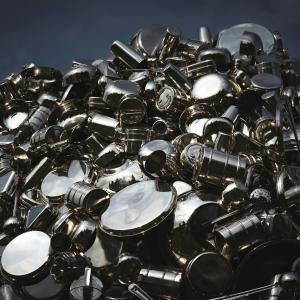
- Develop a novel recycling process for titanium scraps into high-grade powder suitable for MEX (Helmholtz-Zentrum Hereon, Germany).
- Investigate environmentally friendly bio-based binders for titanium feedstock (Montanuniversitaet Leoben, Austria).
- Conduct systematic testing of recycled titanium powders with bio-based binders in MEX processes (MTEC and Taisei Kogyo, Thailand).
- Benchmark recycled feedstock performance against conventional titanium materials.
- Disseminate results through academic publications, international conferences, and public seminars.
The science
The project combines materials science, powder metallurgy, polymer processing, and additive manufacturing. Key research contributions include:
- Development of a recycling route for titanium scraps with reduced energy consumption and lower costs.
- Design of sustainable binders for MEX additive manufacturing.
- Integration of recycled powder and bio-binders into near-net-shape additive processes.
- Comprehensive characterisation (SEM, EBSD, TEM, CT-scan, mechanical testing) of recycled titanium feedstocks.
- Demonstration of the feasibility of recycled, environmentally friendly feedstocks for orthopaedic device applications.
The team
- Dr. Anchalee Manonukul (Coordinator), National Metal and Materials Technology Center, Thailand
- Prof. Dr.-Ing. Florian Pyczak, Helmholtz-Zentrum Hereon GmbH, Germany
- Univ.Prof. Dr. Clemens Holzer, Montanuniversitaet Leoben, Austria
- Dr. Makiko Tange, Taisei Kogyo Co., Ltd., Thailand
Contact
Dr. Anchalee Manonukul E-Mail: anchalm@mtec.or.th