image
NEWS

Call for speaker's applications: Meet My Lab x JFS

The call for speaker’s applications is now open: Present your laboratory and find partners in the Meet My Lab x JFS online event - Deadline for application: August 31, 2021 at 23:59 CEST
Posted on

CLOSED***Event announcement: Meet My Lab x JFS: “Sustainable Food Production” and “Climate Change: Resilience & Adaptation” (8-9 September, 2021)

Present your laboratory in a live video session and find partners for your international research cooperation at the upcoming virtual event of Meet My Lab x JFS.

The Southeast Asia-Europe Joint Funding Scheme for Research and Innovation (JFS) in cooperation with EURAXESS ASEAN is looking for researchers from Southeast Asia and Europe that are interested in presenting their laboratory at our Meet My Lab x JFS event.

To support the European-Southeast Asian scientific cooperation, the JFS in cooperation with EURAXESS ASEAN is looking for laboratories across Southeast Asia and Europe.

Who should apply?

  • Are you from a Southeast Asian or European country?

  • Are you working in a laboratory that is perfect for the realization of research projects?

  • Are you looking for partners from Southeast Asia and/or Europe to implement international research cooperation?

If yes, apply now for the Meet My Lab x JFS virtual event and present your laboratory and in this way open possibilities of cooperation to potential partners.

How to apply?

Please fill in the application form and make a brief video about your laboratory to be submitted to: SEA_EU_JFS@servicefacility.eu

Your video should be no longer than 03:00 minutes and should show all significant things that make your laboratory special (e.g. special equipment, facility etc.). You can use your smartphone or any other equipment to make your video.

Deadline for application: August 31, 2021 at 23:59 CEST

------------------------------------------------------------------------------------------------------------------

Meet My Lab x JFS, a cooperation between EURAXESS ASEAN and JFS

September 08, 2021 – 09:00am CEST / 15:00pm Singapore time: “Sustainable Food Production”

September 09, 2021 – 09:00am CEST / 15:00pm Singapore time: “Climate Change: Resilience & Adaptation”

Venue: Online

Meet My Lab x JFS will provide information about EURAXESS ASEAN and JFS and its 7th Joint Call for Proposals, which is currently open for submission of research proposals. Selected Southeast Asian and European researchers seeking to extend their international research network will present their laboratory.

All details for your participation will be published on our website and distributed through our social media channels soon.


Poster

Launch of the 7th JFS STI Call
NEWS

Launch of the 7th STI JFS Call

The 2021 STI Joint Call for Proposals: Sustainable Food Production and Climate Change: Resilience & Adaptation is now open for applications.
Posted on

The JFS is happy to announce today's launch of the 7th STI Joint Call for Proposals in the two thematic areas of:

  • SUSTAINABLE FOOD PRODUCTION and
  • CLIMATE CHANGE : RESILIENCE & ADAPTATION

Which types of projects are funded?

Southeast Asia - Europe Joint Call Project consortia must comprise of at least 3 partners from 3 different countries fulfilling the 2+1 rule: Either 2 partners from 2 different Southeast Asian countries and 1 European partner or 2 partners from 2 different European countries and 1 Southeast Asian partner. At least 1 partner from each region must be eligible for JFS funding. Further, the coordinator must be selected from among the partners eligible for funding. The required third partner can be funded by a funding organization from a country participating in the JFS or bring his own funding. The proposals have to cover the thematic areas of “Sustainable Food Production” or “Climate Change: Resilience and Adaptation” to enhance bi-regional cooperation and develop new partnerships as well as strengthen existing ones. Please read the National Regulations from the funding organization that you are requesting funding from carefully since the National Regulations may include additional requirements, e.g. certain Technology Readiness Levels.

What is the submission deadline?

15 October 2021 12:00 (noon) CEST/ 05:00 pm Bangkok time

What is the scope of the projects?

Funding will typically be provided for the duration of a maximum of three years (36 months). They should start earliest in June 2022.

Within the framework of the Joint Call, funding can in general be applied for:

  • Personnel costs
  • Equipment and consumables (project-related miscellaneous expenses and project-related larger equipment)
  • Mobility costs (exchange research visits between Europe and Southeast Asia. Travel costs, living expenses and visa costs are eligible for funding.
  • Other costs (Costs which cannot be classified under the previous cost items but are required for the project implementation, such as costs related to dissemination, intellectual property, demonstration, market search, management, organisational and subcontracting costs)

Which countries and funding agencies/ministries are participating?

(1= Sustainable Food Production; 2= Climate Change: Resilience and Adaptation)

  • Belgium – National Fund for Scientific Research (FRS-FNRS) 1,2
  • Brunei Darussalam – University of Brunei Darussalam (UBD) 2
  • Bulgaria – Bulgarian National Science Fund (BNSF) 1,2
  • Cambodia – Ministry of Education, Youth and Sport (MEYS) 1,2
  • Czech Republic – Czech Academy of Sciences (CAS) 1,2
  • Germany  Federal Ministry of Education and Research (BMBF) 1,2
  • Indonesia – Ministry of Research and Technology / National Research & Innovation Agency (RISTEK / BRIN) 1,2
  • Lao PDR  Ministry of Education and Sports, Cabinet of Lao Academy of Science (MOES) 1,2
  • Malaysia – University of Malaya (UM) TBC
  • Malaysia – Universiti Putra Malaysia (UPM) 1,2
  • Myanmar – Ministry of Education (MOE) TBC
  • Netherlands – Dutch Research Council (NWO) 1,2
  • Philippines – Philippine Council for Health Research and Development (PCHRD) 2
  • Philippines – Philippine Council for Industry, Energy and Emerging Technology Rsearch and Development (PCIEERD) 2
  • Spain – Centre for the Development of Industrial Technology (CDTI) 1,2
  • Switzerland Swiss National Science Foundation (SNSF) 1,2
  • Thailand - National Science and Technology Development Agency/Program Management Unit – Brain Power (NSTDA/PMU-B) 1,2
  • Turkey – Scientific and Technological Research Council of Turkey (TÜBITAK) 1,2

More information on the call content can be found on this website under "calls": https://www.sea-europe-jfs.eu/call/2021-sti-joint-call-proposals-sustainable-food-production-and-climate-change-resilience-0

The call document can be found under "documents": https://www.sea-europe-jfs.eu/document/7th-sti-jfs-call-text

Downloads
DOCUMENT

7th STI JFS Call Text

This Document Call Text 7th STI JFS Call Text 2021 available for download
Posted on 14. Jun. 2021
Year of publication
2000
Document Type
PDF
Downloads
FRESHBIO
PROJECT

1st Joint Call: FRESHBIO

This project will study the diversity, biological states and uses of freshwater biotas in the insular biodiversity hotspots of Southeast Asia. It is funded under the 1st Call of the Southeast Asia - Europe Joint Funding Scheme for Science and Innovation.
Posted on

Background

Around the world, natural ecosystems are being put under increasing pressure by mankind. Maintaining high levels of biodiversity is vital to ensuring the continuing sustainability of ecosystems, and areas at particular risk are identified as ‘biodiversity hotspots’. There are three such insular hotspots in Southeast Asia, which are among the most endangered in the world.

However, there is a lack of consistent recording of animal and plant life within these ecosystems, which hampers conservation efforts. This lack of accurate and reliable databases in Southeast Asia, limits research on ecology and global climate change. Such research is becoming increasingly important as greater areas and populations begin to experience the effects of climate change – particularly those whose livelihoods depend on wildlife.

To get a clearer picture of the state of freshwater biotas in insular hotspots in Southeast Asia, urgent steps must be taken. Firstly, DNA-based methods of species inventory are needed to speed up the inventory of biodiversity, and accurate biodiversity mapping is urgently needed to guide conservation strategies.

For this work to take place, capacity building on wildlife forensics is needed to promote new and sustainable practices for species identification, while local populations living in these areas will also need guidance to adapt to the potential effects of biodiversity loss.

The project

The FRESHBIO project aims to address all of these issues through the following steps. Firstly, the team will support DNA barcoding campaigns to build-up reference libraries for automated species identification and its application in environmental DNA barcoding. They will then explore historical trends in population demography and species aggregation in ecological communities to address the state of aquatic biotas (expansion vs. contraction), and estimate the impact of land conversion on diversity patterns through a geographic information system approach. Finally, the project will explore the dynamics of adaptation and resilience of human populations to environmental changes.

The Science

Three main hypotheses are underpinning FRESHBIO: (1) DNA barcoding is an effective paradigm to document biodiversity as it is effective whatever the life stages, spectacular levels of cryptic diversity are often reported and libraries are publicly available. (2) Pleistocene climatic fluctuations predict diversity patterns. Emerged land in Sundaland represents only 50-75% of its maximal Pleistocene surface and its biotas are currently in a refugial state. By contrast, the Wallacea and Philippines hotspots have been continuously isolated from the main land during PCF. (3) Wildlife dependent peoples are sentinels of environmental changes. Resilience and adaptive responses of local fisherfolk to disturbed aquatic ecosystems may be assessed through the peoples’ capacity to anticipate ongoing changes. If addressed through time, people adaptive strategies might be indicative of early ecosystemic changes.

The FRESHBIO partners are:

Dr. Hendrik FREITAG: Ateneo de Manila University (ADMU), Philippines

Dr. Daisy WOWOR: Indonesian Institute of Sciences (LIPI), Indonesia

Dr. Nicolas HUBERT: Institut de Recherche pour le Développement (IRD), France 

Dr. Thomas von RINTELEN: Museum für Naturkunde (MfN), Germany

Dr. Philippe KEITH: Muséum National d’Histoire Naturelle (MNHN), France

Dr. Edmond DOUNIAS: Institut de Recherche pour le Développement (IRD), Indonésie


Contact:

Nicolas Hubert: Nicolas.hubert@ird.fr

SKUD
PROJECT

1st Joint Call: SKUD

This project studies the emergence of Skin Ulceration Diseases in Edible Sea Cucumbers in a Global Change Framework. It is funded under the 1st Call of the Southeast Asia - Europe Joint Funding Scheme for Science and Innovation
Posted on

Background

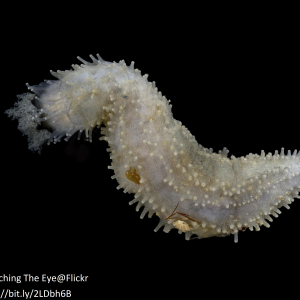
Sea cucumbers are a delicacy across South and East Asia, yet with increasing market pressure and the effects of climate change, numbers are reducing at an alarming rate, particularly in the Indo-Pacific. Sea cucumber fisheries are in a worse state than most fisheries globally.

Over the past 2 decades, the production a particular breed of edible sea cucumber, Holothuria scabra, has ensured sufficient production and made its aquaculture profitable. However, it is thought that increasing water temperatures and ocean acidification could be causing an increase in skin ulceration diseases in sea cucumbers. Such diseases could seriously affect their production, affecting not only the animals, but also the local economies which depend upon their growth and sale. 

The project

The SKUD project aims to study the emergence of diseases, especially SKUDs, in edible sea cucumbers outside Madagascar, especially in Thailand and France, within a global change framework.

The team aim to firstly make a survey of parasites and diseases of two edible sea cucumbers (Holothuria forskali in France and Holothuria scabra in Thailand, and will then determine the cause(s) of SKUDs on these species. With this information, the team will then assess the effects of increased temperature and decreased pH, at values commensurate with predicted global changes, on SKUD prevalence and development.

The Science

The SKUDs that are emerging diseases in new aquacultures will be characterized for the first time by adequate “high tech” methods including metagenomic analyses and the originality of the researches as well as the strength of the involved teams insures the diffusion of the results through international publications. The assessment of the possible impact of global change stressors on SKUD diseases will help forecasting and preventing their exacerbation in aquaculture conditions. The cost of possible mitigations through manipulation of temperature and/of pH in aquaculture basins can then be assessed.

Commercially, the understanding of sea cucumber diseases is of the utmost importance as these fisheries expand worldwide with a Chinese market pressure of increasing affluence. Sea cucumbers have attracted much interest in export-oriented fisheries in at least 70 countries. Collecting sea cucumbers for production of ‘‘bêche-de-mer’’ or ‘‘trepang’’ (the dried body wall) and export to the Asian dried seafood market has a long history in the productive waters of the Indian and Pacific Oceans. The majority (66%) of sea cucumber fisheries involved small-scale fishing operations for export. The Team:

The SKUD partners are:

Igor EECKHAUT/ University of Mons (Belgium)

Anchana PRATHEP / Prince of Songkla University (Thailand)

Philippe DUBOIS / Free University of Brussels (Belgium)

Nadia AMEZIANE / Muséum National d'Histoire Naturelle, Station de Biologie Marine de Concarneau (France)

Contact:

Igor Eeckhaut

Climate Resistant Rice
PROJECT

1st Joint Call: 'Climate-Resilient Rice' in Thailand and Laos

This project aims to strengthen rice breeding programs in Laos and Thailand and develop climate-resilient rice varieties. It is funded under the 1st Call of the SEA-Europe Joint Funding Scheme for Science and Innovation.
Posted on

The project:

Rice is a staple food for more than half of the world’s population, and one of the major crops for both consumption and as a commodity in Southeast Asia. However, it is also vulnerable to the effects of climate change, and increased temperatures worldwide are predicted to cause reduced crop yields in the future.  

To counteract this, the Climate-ResilientRice project (CRR) aims to strengthen rice breeding programs in Thailand and Laos, so that crops will be able to withstand the effects of climate change, and even enhance production under adverse conditions.

CRR has been funded through the 1st Call of the Southeast Asia-Europe Joint Funding Scheme for for Research and Innovation (JFS) and brings together a team from both regions to tackle this pressing issue.

The Science:

The project will use a varietal improvement process based on the most advanced knowledge of traits which are affected by climate change, such as  high temperatures (that cause yield losses due to rice flowers’ sterility), and use proven methods of marker-assisted selection on a state of the art breeding data-management system.

It will also make use of complementary experimental facilities, including field and greenhouse phenotyping facilities in NAFRI/BIOTEC, respectively, growth chamber facility mimicking high temperature at CIRAD, and molecular marker lab at BIOTEC.

The Team:

The CRR project partners are:

  • Rice Gene Discovery Unit, BIOTEC, NSTDA, Pathumthani, Thailand (Project Coordinator)
  • Agriculture Research Center (ARC),National Agriculture and Forestry Research Institute (NAFRI), Vientianne, Laos
  • French Agricultural Research Centre for International Development (CIRAD), Montpellier, France

Contact:

Jonaliza L. Siangliw: jonaliza.sia@biotec.or.th

RESCuE
PROJECT

1st Joint Call: RESCuE

The project will undertake monitoring and restoration for sustainable coastal ecosystems. It was funded under the 1st Call of the Southeast Asia - Europe Joint Funding Scheme for Science and Innovation.
Posted on

The Project:

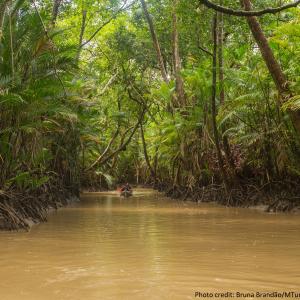
Mangroves are forests that grow along saline coastal areas with tropical and subtropical climates, and are a crucial part of the natural ecosystem throughout Southeast Asia. They are an indispensable natural resource; mangroves not only act as ‘nurseries’ for marine species and huge carbon storage areas, but they also protect coastal areas from erosion, storms and tsunamis.

Unfortunately, mangroves have come under significant threat from industrial practices, such as shrimp farming and logging, as well as pollutants, chemicals and temperature stress. In Thailand, mangroves have been reduced by almost 50% over the past 4 decades,

The RESCuE project will work to mitigate mangrove forest loss and degradation in Thailand and Vietnam. It will do this by developing databases to understand, conserve and rehabilitate mangrove areas. The team will then work with local communities to identify areas which are suitable for replanting mangroves, and hold trainings and workshops for local practitioners to ensure that the coastal ecosystem management in Thailand and Mekong delta of Vietnam remain sustainable in the future.

The Science

The project will undertake the following activities:

  • Developing suitable decision-making tools for mapping and monitoring distribution of mangrove communities and cover loss in the conservation zone using satellite and ground survey data:
  • Estimating the mangrove community aboveground carbon stock and its dynamics
  • Providing decision support tools for the design of rehabilitation measures
  • Developing site-specific recommendations for rehabilitation projects to policy makers
  • To recommend the suitable model for ecosystem services in the coastal areas
  • Strengthening the capacity of local forest practitioners and disseminating knowledge of local communities via short training and meetings

The Team:

The RESCuE partners are:

  • CIRAD, UPR Forests and Societies (F&S), Montpellier, France (Project coordinator)
  • LETG Rennes COSTEL, France
  • European Commission, Joint Research Centre, Ispra (VA), Italy
  • Technische Universität Dresden, Faculty of Environmental Sciences Tharandt, Germany
  • X-ability Co. Ltd, Tokyo, Japan
  • The Joint Graduate School of Energy and Environment, King Mongkut's University of Technology , Bangkok, Thailand 
  • Department of Silviculture, Faculty of Forestry, Kasetsart University, Bangkok, Thailand
  • Department of Land Resource, College of Environment and Natural Resources, Can Tho university, Vietnam
  • Royal Forest Department, Bangkok, Thailand 
  •  

Contact:

Prof. Valery Gond  (valery.gond@cirad.fr)

CWSSEA
PROJECT

1st Joint Call: CWSSEA

This project will studying the effects of climatic water stress on mature and secondary forests in Southeast Asia. It was funded under the 1st Call of the SEA-Europe Joint Funding Scheme for Science and Innovation.
Posted on

Background:

Forests are the carbon banks of the world, playing a vital role in absorbing carbon dioxide in the atmosphere, and ensuring that ecosystems and soil are enriched and productive.  

However, the forests of many Southeast Asian countries, including in Thailand, have undergone significant deforestation in recent decades, while the effects of climate change also mean that incidents of climatic water stress - such as droughts and rising temperatures – will become more frequent and severe in the future.

This double threat could lead to rising mortality in the tropical monsoon forests of Southeast Asia. This would mean lower biodiversity, worsening climate change, and damage to entire ecosystems, resulting in real-life effects on human well-being.

The Project:

The CWSSEA (Climatic Water Stress – Southeast Asia) project will study the functioning of tropical forests, particularly secondary forests in Thailand, and assess how they will respond to climatic water stress and the potential impacts of future climate scenarios in these ecosystems.

This information will then assist in creating model predictions on the long-term scenarios of climate change impacts on forest ecosystem services, and influence future global policies to combat climate change.

The Science:

The researchers will measure canopy transpiration, which is frequently used to estimate canopy stomatal conductance; a central variable in modeling the uptake of carbon by forests. Measurements will be made in both mature and secondary forests, which in turn will allow for the investigation of species-specific responses to water stress by assessing tree hydraulics and drought vulnerability of the dominant species in each forest type.

The team will also explore the degree of soil water partitioning among species within each forest to provide a more mechanistic understanding of how individual trees are able to overcome drought stress.

Taken together, this will be one of the first studies to quantify canopy transpiration, tree hydraulics and drought vulnerability as well as the mechanisms dominant tree species in both mature and secondary tropical forests use to overcome drought stress, which will provide the necessary information to more accurately predict how climate change will affect the carbon and water cycle in tropical forests.

The Team:

The CWSSEA partners are:

  • Chulalongkorn University, Bangkok, Thailand
  • Kasetsart University, Bangkok, Thailand
  • National Science and Technology Development Agency, Pathum Thani, Thailand
  • Swedish University of Agricultural Sciences, Umeå, Sweden
  • Bordeaux Sciences Agro, Bordeaux, France

Contact:

Pantana Tor-ngern: Pantana.t@chula.ac.th

H2020 Naypyidaw
NEWS

EU delegation presents opportunities for collaboration at 17th ASEAN STI Meeting

Horizon 2020 and Southeast Asia-Europe Joint Funding Scheme presented to ASEAN STI ministries in Naypyidaw, Myanmar
Posted on

A delegation of EU representatives presented the many opportunities available for increasing collaboration between Southeast Asian and European researchers at the 17th ASEAN Ministerial Meeting on Science and Technology in Naypyidaw, Myanmar, on 19th October 2017.

The delegation, led by Konstantinos Glinos of the European Commission, highlighted the similarities between the ASEAN Plan of Action on Science, Technology and Innovation (APASTI) and EU STI policy objectives, and presented the many avenues for collaboration open to researchers, including Horizon 2020, information services offered by EURAXESS, and opportunities for jointly funded SEA-EU projects through the Southeast Asia-Europe Joint Funding Scheme (JFS).

The delegation announced the upcoming calls for Horizon 2020 funding (the new Work Programme 2018-2020 was published on October 29 – visit this link), and presented the preliminary outcomes of the 1st call of the Southeast Asia-Europe Joint Funding Scheme (JFS) which had taken place on 16-17 October in Bangkok, Thailand.

In addition to this, a number of side events took place to further promote SEA-EU collaboration in science, technology and innovation. During the Ministerial Meeting, the delegation engaged in a number of bilateral discussions with Thai and Vietnamese funding agencies, while a European Union booth at the ASEAN STI week promoted all of the mentioned opportunities to interested researchers. The JFS Secretariat also held a side-event on the 20 October for representatives of ASEAN funding agencies which would be interested in participating in future JFS calls.

The JFS Scientific Council in Bangkok
NEWS

SEA-EU Joint Funding Scheme holds successful funding decision meeting in Bangkok

First JFS Joint Call results in securing commitments to fund 10 projects
Posted on

The first Joint Call of the Southeast Asia-Europe Joint Funding Scheme (JFS) for research and innovation has succeeded in securing commitments to fund 10 projects, which will bring together research teams from both regions to tackle some of the most pressing issues faced today in the fields of health and climate change. 

The meetings of the JFS Scientific Committee and Programme Steering Committee were held in Bangkok, Thailand, on the 16 and 17 October respectively, and were attended by representatives from many research funding agencies from across South East Asia and Europe.The meetings were hosted by the National Science and Technology Development Agency (NSTDA) Thailand and the  Thailand Center of Excellence for Life Sciences (TCELS).

In this first call, two areas of research were selected for funding; firstly projects related to health, focusing specifically on anti-microbial drug resistance and emerging infectious diseases, and secondly, on projects relating to the environment and climate change which have a specific focus on adaptation / resilience of food production systems, and the impacts of climate change on ecosystems and biodiversity.

The successful proposals were announced in December, and are expected to start in the early months of 2018. Given the considerable success of the 1st Call, the JFS Secretariat received unanimous support from those present to hold a 2nd Call in 2018. It is hoped that this continuation will attract even more participating countries and funding agencies from both regions to fund many more joint projects in the future.